
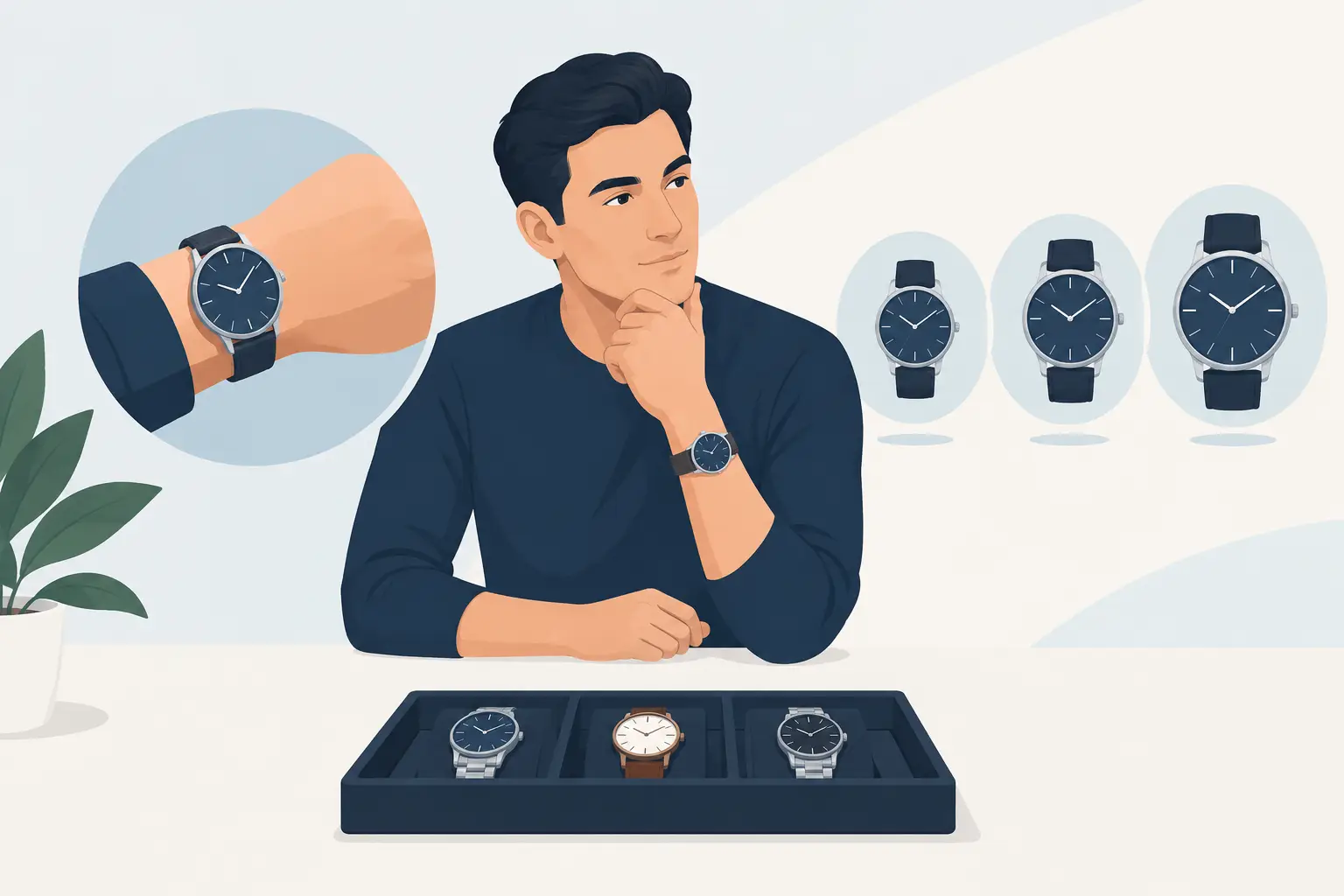
A watch can have a premium dial, a sharp bracelet, and all the right luxury-inspired details, yet still look wrong if the proportions miss your wrist. Learning how to choose watch sizes is what turns a good-looking piece into a watch you actually want to wear every day.
The right size is not only about whether a case is labeled 40 mm or 44 mm. Case shape, lug-to-lug length, thickness, bezel width, strap style, and your own wrist shape all change the final look. A 40 mm dress watch can wear larger than a 42 mm sports watch, especially when it has long lugs or a wide, bright dial.
How to Choose Watch Sizes by Measurement
Start with your wrist circumference. Use a soft measuring tape just above the wrist bone, where you normally wear your watch. No tape measure? Wrap a strip of paper around the wrist, mark the overlap, then measure it against a ruler.
Wrist circumference gives you a practical starting point, not a hard rule. If your wrist is under 6.25 inches, cases from 34 mm to 38 mm often look balanced. A 38 mm to 40 mm watch is a strong all-around range for wrists around 6.25 to 7 inches. If your wrist is 7 to 7.5 inches, 40 mm to 42 mm is usually an easy fit. Larger wrists can carry 42 mm to 46 mm cases well, particularly in sport and chronograph styles.
Those ranges are only the first filter. A flat, wide wrist can handle a bigger case than a round wrist with the same circumference. Personal style matters too. Some buyers want a compact, classic look. Others want a bold wrist presence that stands out with a T-shirt, polo, or tailored evening outfit.
Case diameter sets the first impression
Case diameter is the number most shoppers see first. It measures the width of the watch case without the crown. Smaller diameters tend to feel cleaner, more traditional, and easier to dress up. Larger diameters create more impact and work naturally with sporty, modern, or statement-focused designs.
For a refined daily watch, 36 mm to 40 mm remains a smart zone. These sizes sit comfortably under most shirt cuffs and avoid overpowering the wrist. A 40 mm to 42 mm case is a popular middle ground for buyers who want a noticeable luxury look without moving into oversized territory.
A 43 mm or 44 mm watch can look excellent, but it needs the right wrist and outfit. These cases suit chronographs, dive-watch designs, and thick-bezel sports styles because the added visual weight feels intentional. On a smaller wrist, the same size may look like the watch is wearing you.
Lug-to-lug is the measurement people miss
Lug-to-lug is the distance from the top tip of the lugs to the bottom tip. Lugs are the parts of the case that hold the bracelet or strap. This number often matters more than case diameter.
As a simple fit check, the lugs should not extend beyond the edges of your wrist when you look straight down. A watch may be listed as 40 mm, but long lugs can make it wear closer to a much larger piece. Conversely, a cushion-shaped case or a watch with short curved lugs can wear compact even when the diameter sounds large.
If product measurements are available, compare the lug-to-lug length to the flat width of your wrist. For many buyers, a lug-to-lug of 44 mm to 48 mm is comfortable for daily wear. Around 50 mm can still work on a medium wrist if the lugs curve down. Above that, check carefully unless you know you like an oversized fit.
Watch Thickness Changes Comfort and Style
Thickness is easy to ignore until a watch catches on a shirt cuff or feels top-heavy during a long day. Thin watches, usually around 7 mm to 10 mm, have a sleek dressy profile. They are ideal for office wear, dinners, weddings, and anyone who prefers a low-key look.
A thickness of 10 mm to 13 mm is common for versatile automatic-style and sports watches. This range gives the watch enough presence without making it feel bulky. Thicker cases, especially 14 mm and above, suit dive-inspired models and chronographs, but they can feel substantial on smaller wrists.
Think about your routine before choosing. If you spend most days in long sleeves, a slimmer case is easier to live with. If your style is more casual, with denim, sneakers, polos, or short sleeves, a thicker sports watch can look exactly right. There is no need to force a thin formal watch into a gym-and-weekend wardrobe, or a giant diver under a fitted dress cuff.
Match the Strap or Bracelet to the Case
The strap is not an afterthought. It changes both comfort and how large the watch appears. A bracelet adds visual weight, especially polished metal links. A leather strap makes the same case look more compact and dressy. Rubber and silicone straps create a sportier profile and are practical for active use and warm weather.
Strap width should look proportional to the case. Most balanced watches use a strap that is roughly half the case diameter. A 40 mm watch commonly pairs well with a 20 mm strap, while a 42 mm case may use 21 mm or 22 mm. A strap that is too narrow can make a large case look top-heavy. One that is too wide can make a compact watch lose its clean shape.
Bracelet fit matters as much as size. It should sit close to the wrist without digging in or sliding around. A slight amount of movement is normal, but a watch should not rotate constantly to the side of your wrist. If you are buying a metal bracelet, plan for adjustment so the fit feels secure rather than loose.
Choose a Size for Your Personal Style
A watch should match your wardrobe, not just a measurement chart. If you lean toward quiet, polished outfits, a 36 mm to 40 mm watch with a simple dial is usually the most flexible choice. It looks right with a blazer, button-down, or clean casual basics.
If your wardrobe is bolder, a 40 mm to 44 mm sports watch adds more wrist presence. Dark bezels, textured dials, multi-function subdials, and substantial bracelets all read larger than their stated diameter. That can be exactly what you want when the watch is the main accessory.
For a first luxury-inspired watch, avoid choosing only by trend. Oversized watches can look powerful in product photos but may feel tiring after a few hours. On the other hand, buying too small because you are playing safe can leave you wishing for more impact. The best choice is the one that feels natural when you check your wrist without thinking about it.
A Quick At-Home Sizing Test
Before placing an order, cut a paper circle matching the stated case diameter and rest it on your wrist. It is not a perfect replacement for trying on a real watch, because it cannot show thickness, lugs, or weight, but it helps you picture the diameter.
For a better check, draw the full lug-to-lug measurement on paper too. Place the shape where the watch would sit and view it in a mirror from arm’s length. Phone-camera close-ups can exaggerate watch size, so trust the mirror and your normal viewing distance more than a zoomed-in photo.
When comparing options, do not assume every 40 mm watch wears the same. A slim 40 mm watch with a narrow bezel can look broad and dial-forward. A 40 mm dive-inspired model with a thick bezel may appear smaller, while still feeling heavier due to its thickness and bracelet.
At Luxury Master Copy Dubai, the strongest approach is to check the listed case dimensions, then choose based on your wrist, wardrobe, and the kind of presence you want. A well-sized watch looks intentional, comfortable, and expensive in the way that matters most: it belongs on your wrist.






Add comment