
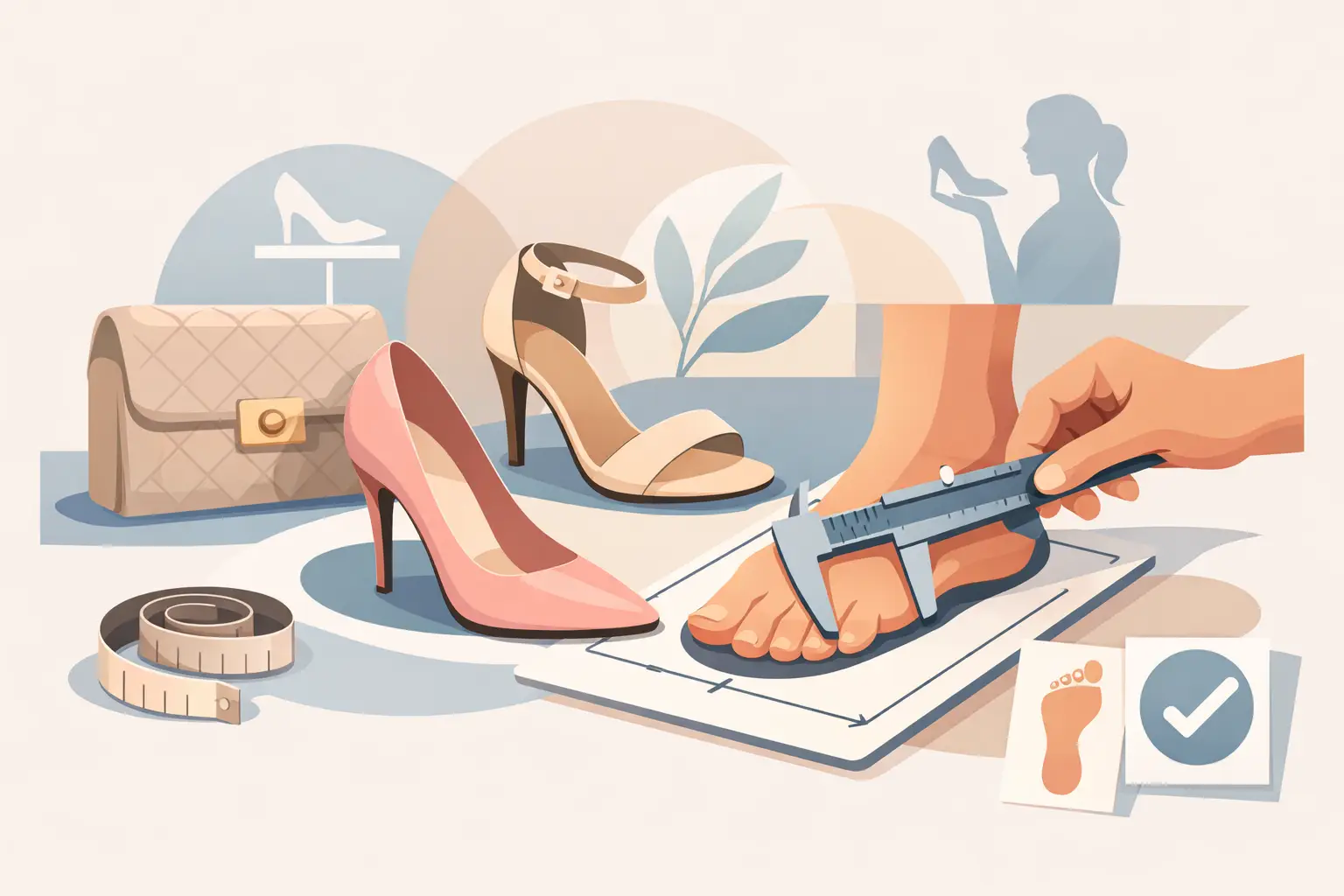
A sharp pair of heels can look expensive, but if your toes are pressed against the front after ten minutes, the whole look loses its appeal. Womens luxury shoe sizing is not as simple as choosing the number you usually wear. The fit can change with the shoe shape, toe box, heel height, material, and the factory that produced the pair.
For shoppers buying luxury-inspired footwear online, getting sizing right before checkout saves time, avoids disappointment, and helps you wear your new pair with confidence from day one. Here is what actually matters when choosing women’s shoes online.
Why Women’s Luxury Shoe Sizing Varies
A size 7 is not always a size 7. Even within the same style category, a pointed-toe pump can feel dramatically smaller than a round-toe sneaker in the same labeled size. That does not necessarily mean one pair is wrong. It means the shape was designed to fit differently.
Luxury-style shoes also tend to use more fashion-focused silhouettes. Think narrow mule straps, sculpted slingbacks, square-toe sandals, tall boots, and sharply pointed pumps. These designs prioritize a sleek profile, so they may offer less extra room than an everyday running shoe.
Material matters too. Soft leather-like uppers may relax slightly with wear, while patent-style finishes, structured synthetic materials, embellished straps, and rigid soles generally have less give. If you are between sizes, the best choice depends on where you need the space. A little room at the heel can often be managed with an insert. A toe box that is too short cannot.
Factory sizing is another reason to avoid assuming every pair fits identically. Luxury-inspired shoes may be produced using different size charts and lasts, which are the foot-shaped molds used to create footwear. Check the available product measurements whenever they are provided, especially for heels, boots, and closed-toe styles.
Measure Your Feet Before You Order
Your usual size is useful, but a quick measurement gives you a better starting point. Measure both feet at the end of the day, when they are naturally at their fullest. Wear the type of sock, stocking, or liner you expect to wear with the shoe.
Place a sheet of paper against a wall on a hard floor. Stand with your heel lightly touching the wall, keep your weight balanced, and mark the tip of your longest toe. Measure from the edge of the paper to the mark in inches or centimeters. Repeat on the other foot.
Use the longer measurement when comparing a size chart. It is completely normal for one foot to be slightly larger than the other. Buying for the larger foot is almost always the more comfortable move.
Do not focus on length alone. If you have a wider forefoot, high instep, bunions, or a particularly narrow heel, those details affect your fit just as much as the number on the box. A shoe can be long enough and still feel wrong because the straps pinch, the vamp presses down, or the heel slips.
Convert Sizes Carefully
US, EU, and UK sizing labels are not interchangeable. Conversion charts are helpful, but they are approximations rather than promises. An EU 38, for example, may be listed as a US 7.5 or US 8 depending on the maker and the shoe’s intended fit.
When a product page gives both a labeled size and an insole or foot-length measurement, trust the measurement first. Compare it to your longer foot length, then leave a small amount of room for movement. Closed shoes need a little more allowance than open sandals. Your toes should not touch the front edge when standing.
Choose the Right Size for the Shoe Style
The best sizing choice changes by silhouette. This is where many online shoppers get caught out.
Pointed-Toe Pumps and Closed Heels
Pointed pumps are a statement pair, but the tapered front naturally reduces usable toe space. If your feet are wider, if you are between sizes, or if the review notes a narrow fit, sizing up half a size is often the safer option. You can fine-tune a slightly roomy heel with a heel grip or slim insole.
Do not automatically size up if you have narrow feet and a low-volume foot. Too much space can cause your heel to lift with every step, which creates rubbing and makes walking in heels harder.
Sandals, Slides, and Mules
Open-toe sandals are more forgiving in length, but straps are the deciding factor. Check whether your foot sits fully on the footbed without your heel hanging over the back or your toes reaching the edge. A slide that is too short looks awkward and feels unstable.
For narrow straps, a wider foot may need the next size up. For adjustable ankle straps, length is easier to control, but the front band still needs to sit comfortably across the widest part of your foot. If a sandal is rigid and has no stretch, do not expect it to loosen much.
Sneakers and Casual Flats
Sneakers usually provide the most flexibility, particularly if they have laces. If you prefer thicker socks, have a wide forefoot, or will wear them for long walks, prioritize comfort over a tightly fitted fashion look. Your heel should feel secure, but your toes should be able to move naturally.
Ballet flats and loafers are different. A soft flat may mold gently to your foot over time, while a structured loafer may remain firm across the vamp. If the shoe is snug only around the sides but has adequate length, light wear can improve the feel. If your toes are cramped, choose a larger size instead.
Boots and Knee-High Styles
Boot sizing has two fit zones: the foot and the shaft. For ankle boots, consider the socks you plan to wear and allow enough room at the toe. For knee-high boots, check calf circumference as carefully as shoe size. A zip can close at first and still feel uncomfortable when sitting or walking if the shaft is too tight.
A slightly roomier boot can work well with socks or a cushioned insole. A shaft that is too narrow is much harder to solve, so measurements matter more than guesswork.
Read Fit Details Like a Smart Shopper
Product photos show style, but fit information helps you buy smarter. Look for details such as “true to size,” “runs small,” “narrow fit,” “wide fit,” or specific foot-length guidance. If no width is listed, consider the design. A sleek pointed shoe with slim straps is less forgiving than a lace-up sneaker with a rounded toe.
Before placing an order, keep four details handy:
- Your longer foot measurement in centimeters or inches
- Your usual US size and the EU or UK size you commonly wear
- Whether your foot is narrow, standard, wide, high-volume, or low-volume
- The socks, liners, or hosiery you plan to wear
This takes less than five minutes and is especially useful when shopping from a wide catalog. At Luxury Master Copy Dubai, asking for fit guidance through customer support before ordering can be worthwhile when you are choosing a new silhouette or trying a particular factory size for the first time.
Small Fit Adjustments That Actually Help
Not every near-perfect shoe needs to be returned. A few simple adjustments can improve comfort when the fit is only slightly off. Heel grips reduce slipping in pumps and slingbacks. Thin forefoot cushions can stop your foot from sliding forward in heels. Ball-of-foot pads add cushioning for high heels, while slim insoles can take up extra volume in sneakers, flats, and boots.
Use these tools for minor adjustments, not to force the wrong size to work. If straps leave deep marks, your toes feel numb, or you cannot walk naturally, the shoe is too tight. If your heel rises out of the shoe with each step even after adding a grip, it is likely too large or the shape does not suit your foot.
Break in new pairs gradually. Wear them indoors on a clean surface for short periods before committing to a full day or a special event. This lets you notice pressure points while the shoes are still in fresh condition.
The most flattering luxury-inspired shoe is the one you can actually walk in. Measure first, respect the silhouette, and choose comfort where the fit is close. A confident stride will always complete the look better than a perfect logo-style detail ever could.





Add comment